An online listing can tell you a watch is 40 mm wide, sterling silver and covered by a two-year warranty, and still leave you with something that sits awkwardly on your wrist or starts to tarnish within weeks. The gap is rarely anyone being dishonest. It is simply that a product page flattens a small mechanical object into a grid of photos and a few bullet points. Silver watches are especially unforgiving here: the metal is soft, the finish matters, and the difference between 38 and 42 mm is the difference between a watch you reach for every morning and one that lives in a drawer.
Below are the mistakes buyers make most often, and the specific things to check so you don't repeat them.
Mistake one: choosing a size from the case diameter alone
Nearly every listing quotes case diameter, so that is the number people fixate on. It is only half the story. Two watches can both be 40 mm across and wear completely differently, because the measurement that decides whether a watch overhangs your wrist is lug-to-lug — the distance from the tip of the top lugs to the tip of the bottom ones.
Before you buy, do three things. First, take a watch you already wear happily and measure it with a ruler: diameter, lug-to-lug, and thickness. Write the numbers down. Second, measure your wrist circumference with a strip of paper and a ruler, and note roughly how wide the flat top of your wrist is. Third, compare those figures with the listing. If the lug-to-lug is wider than the flat part of your wrist, the watch will hang over the edges, and no amount of adjusting the bracelet will fix that.
Two details get missed even by careful buyers. A metal bracelet makes a watch look and feel larger than the same case on a leather strap, and silver bracelets carry real weight. Thickness matters too: anything much over about 12 mm will catch on a shirt cuff, which is worth knowing if you plan to wear it to work.
Mistake two: treating "silver" as one material
The word appears in titles, filters and descriptions, and it can mean three quite different things.
Sterling silver (925)
This is the real thing: 92.5 percent silver, usually alloyed with copper for strength. It should be stamped, typically on the caseback, sometimes inside the lug area or on the clasp. Ask the seller for a clear close-up of the hallmark rather than accepting a line of text. Many silver cases are rhodium-plated to slow tarnishing, which is fine, but that plating does wear at the edges over years of use.
Silver-tone
This usually means stainless steel, brass or another base metal with a silver-coloured finish. It can be perfectly good — a steel case is more scratch-resistant than silver — but it is not a silver watch, and it will not behave like one. If the seller cannot tell you what the case metal actually is, treat that as your answer.
Plated silver
Some affordable pieces are silver with a thin plated layer. Plating thickness varies enormously and is rarely disclosed. On a watch you intend to wear daily, a plating measured in single microns will show wear at the crown and lugs faster than you expect.
The practical fix is simple: put the question in writing before you order. "Is the case solid sterling silver, and where is it stamped?" A seller who deals in silver watches will answer without hesitation.
Mistake three: skimming the specification table
Spec tables are boring, which is exactly why they matter. The details below are the ones that change how a watch lives on your wrist, and the ones most often skipped:
- Movement. Quartz is accurate, cheap to service and needs a battery every few years. Mechanical is more involving but costs more to maintain. Note whether a maker or calibre is named, or whether it is left vague.
- Crystal. Mineral glass scratches more easily; sapphire resists scratches far better. On a soft silver case, a scratched crystal is what usually makes a watch look tired first.
- Water resistance. A 30 m rating generally means splash-resistant only. If you want to swim in it, look for a proper diving rating, and remember that ratings assume the crown is pushed in and seals are intact.
- Lug width. Written in millimetres. Get this wrong and every replacement strap you buy will fit badly.
- Clasp and caseback. A screw-down caseback and a solid clasp are small signs of a watch built to last.
- Weight. Rarely listed, always noticeable. Ask if it isn't shown.
Mistake four: reading the warranty and return terms after paying
This is where online purchases go wrong most expensively. Before checkout, find answers to these questions and keep a copy of the page:
- Is the warranty from the manufacturer or from the seller? A seller warranty can be perfectly legitimate, but it usually means servicing goes back to that shop, not to a local watchmaker.
- Does the warranty cover tarnishing? Often it does not, since tarnish is a normal property of silver rather than a fault.
- How long is the return window, and who pays return shipping? A generous window is worth little if postage costs a fifth of the watch price.
- Are there restocking fees, or conditions that void returns — removing protective film, resizing a bracelet, engraving a caseback?
- What happens if the watch arrives with a fault? Note the deadline for reporting it and photograph the packaging before you open anything.
Return rights differ from country to country, so check the consumer-protection rules that apply where you live rather than assuming the seller's policy is the final word. For a high-value purchase, it is worth taking proper advice rather than relying on a forum thread.
Mistake five: buying from stock photos
A polished render tells you the shape of a watch and almost nothing else. Real photographs show the things you actually need to see: the finish on the case flanks, the sharpness of the lugs, whether the bracelet has been worn, how the dial catches light. Ask for close-ups of the caseback, the hallmark, the clasp and the crown. A short video of the seconds hand moving will confirm the watch runs. If a listing uses one generic set of images across several variants, ask which photographs show the exact piece being shipped.
Mistake six: forgetting the costs that arrive after checkout
The price on the page is rarely the price you pay. On cross-border orders, import duties and tax can add a meaningful amount, and courier handling fees sometimes appear on top. Currency conversion through a card or payment provider adds a little more. Then there is ownership: a mechanical movement needs periodic servicing, silver benefits from an occasional gentle polish with a soft cloth, and a strap is a wear item you will replace long before the watch itself.
None of that should put you off. It should simply be part of the budget you set before you start comparing, so the watch you choose is the one you can actually afford to live with.
A last check before you click buy
- Compare the lug-to-lug measurement with your wrist and with a watch you already own.
- Confirm the case metal in writing, and ask for a photo of the hallmark.
- Read the full spec table, including crystal, movement and water resistance.
- Find the warranty and return terms, and save a copy.
- Request real photographs of the actual piece.
- Add estimated duties, shipping and future servicing to the total.
Five minutes with that list will filter out most of the disappointments that arrive in the post. A silver watch should be something you keep for years, and the buying is the easiest part to get right.
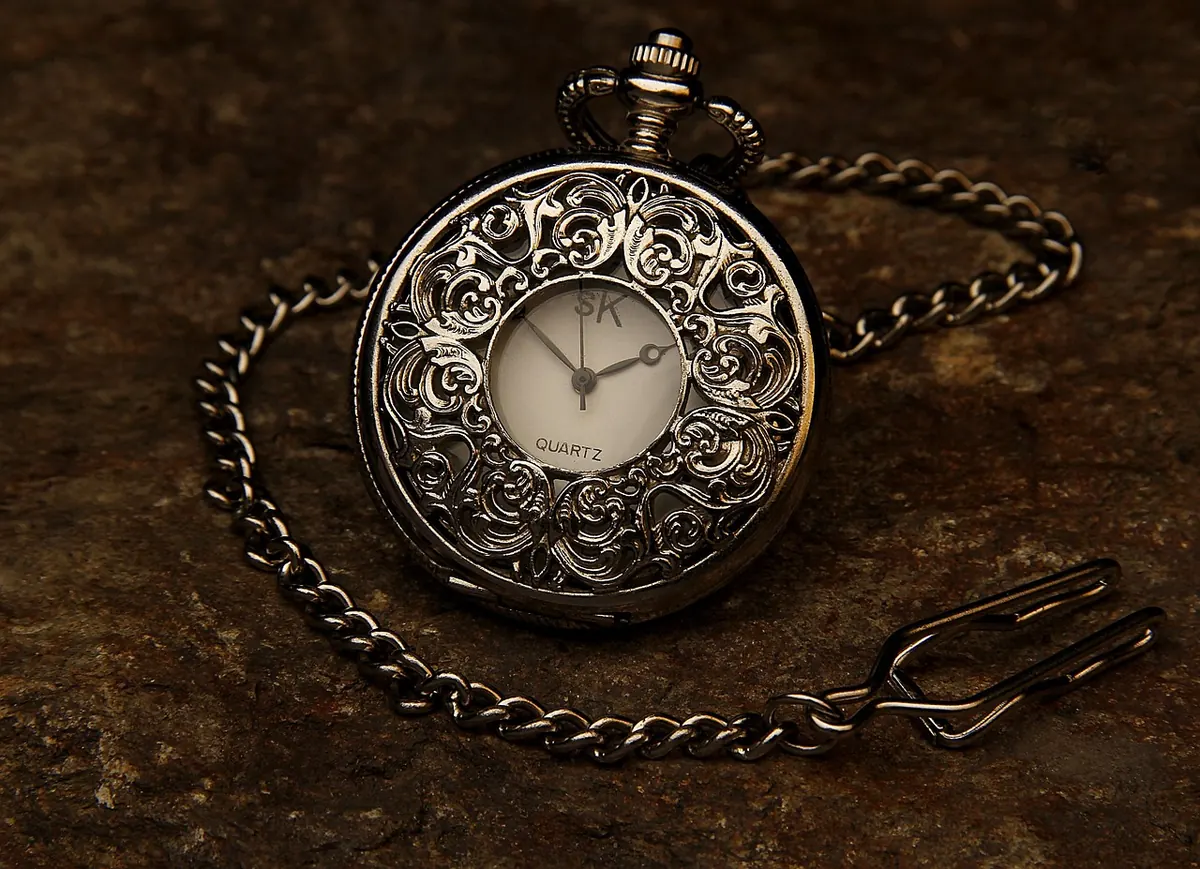
Photo: Yummymoon / Pixabay