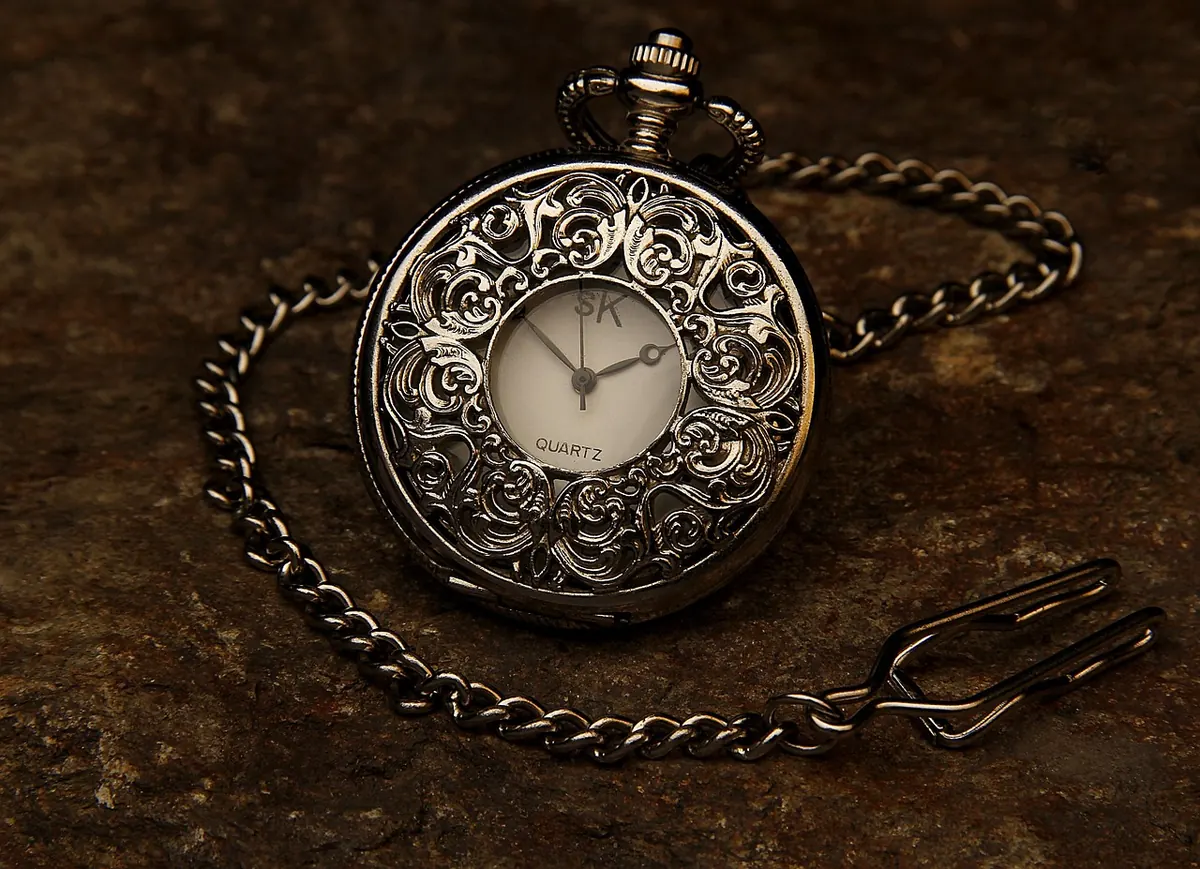
A silver watch rarely fails on its own. It fails when everything around it competes with it. The bracelet that clinks against the case, the ring that fights the dial for attention, the cufflink that is nearly but not quite the same shade of white metal — those are the details that make an outfit look assembled rather than worn.
Matching a silver watch with jewelry is less about strict rules than about a few decisions made in advance: which metal leads, how much shine you want, and where the pieces sit on the body. Get those right and you can dress in the morning without second-guessing.
Let the watch lead, then decide what follows
On most wrists, the watch is the largest metal object in view. Treat it as the anchor and read its finish before you open the jewelry box. A brushed steel case with a matte dial asks for satin or matte companions. A polished dress watch with a slim bezel sits more comfortably beside polished surfaces. A two-tone watch is already doing the mixing for you, so keep the rest quieter.
Look at the strap too. A steel bracelet is a statement on its own and often needs nothing else. A brown leather strap softens the whole wrist and gives you room for warmer accents — gold, brass-toned beads, a wooden bangle. Black leather reads formal and pairs best with white metal only.
One working principle covers most situations: whatever is loudest sets the volume for everything else. If the watch is bold, keep the jewelry restrained. If the watch is plain, you have space to add character elsewhere.
Mixing silver with gold: make it look intentional
Silver and gold can be worn together. What looks careless is not the mix itself but an even split — one gold ring, one silver ring, a gold chain, a silver watch — where no metal clearly dominates. Give one metal the majority and let the other appear as an accent.
The dominant-and-accent approach
If your watch and most of your jewelry are silver, add gold in one or two small places: a thin gold band next to a silver signet ring, or a single gold bead on a cord bracelet. The gold then reads as a choice rather than an accident. The reverse works the same way — a gold watch with silver rings looks fine once the silver has company.
Use a bridge piece
Two-tone pieces exist to solve this problem. A bracelet with silver links and a gold clasp, a ring set with both metals, or a watch with gold hands on a steel case all pull a mixed stack together. If you wear a lot of both metals, one bridge piece is worth more than any amount of matching.
Consider temperature as well. Silver sits cool against the skin; yellow gold is visibly warm; rose gold falls in between and works particularly well with brown leather and beige or olive clothing. In formal settings, keep gold accents small if the rest of the outfit is cool-toned — a gold cufflink beside a silver watch is a nice detail, gold everywhere is a different outfit.
Bracelets: watch wrist or the other one?
Keep the watch side calm. Metal bracelets stacked against a steel watch clasp will scratch the case, rattle against the desk and wear the finish over months. If you want something on the same wrist, make it soft and thin — a leather cord, a fabric band, a slim braided bracelet that sits above the watch rather than over it.
The other wrist is where you can be more generous, with one caveat: a stack should look composed, not accumulated. Three pieces in different widths and textures — one bold, one fine, one with texture — read better than four similar bangles. Keep the total width of the stack roughly in proportion to your watch case; a delicate stack under a large dive watch disappears, and a chunky one under a slim dress watch overwhelms it.
- Match the metal first. Start with bracelets in the same family as the watch, then add a second metal in one small piece.
- Mix textures, not colors. Polished, brushed, braided, beaded — variety in surface keeps a stack interesting without noise.
- Mind the noise. Metal on metal on the same wrist is the fastest way to damage a polished case and the fastest way to annoy yourself in a quiet room.
- Keep beads casual. Beaded and corded bracelets suit weekend and office-casual wear; they look off next to a thin dress watch and a shirt cuff.
Rings: keep the hand quieter than the wrist
The eye travels from wrist to hand, so the two areas need to relate. If the watch is large and reflective, one ring is usually enough. If the watch is plain or slim, you can wear two or three rings without the hand looking crowded.
Watch the proportions. A wide, flat-topped ring next to a slim dress watch makes the watch look smaller than it is; a heavy sports watch can carry a wider band easily. A plain silver band, a brushed signet ring and a single thin stacking ring are the three most versatile shapes, and they hold up well next to steel because their finishes echo a brushed case.
On mixing: a gold wedding band beside a silver watch is common and entirely fine. If you want the gold to feel deliberate, repeat it once — a gold ring on the other hand, a gold bracelet on the opposite wrist — so it appears as part of a scheme. Two rings on the same hand plus a bracelet stack plus a steel watch is usually one piece too many; remove the least interesting one.
Cufflinks and formalwear: match the finish, not just the color
With a shirt and cufflinks, you have two metal moments on the same arm: the cuff and the wrist. Consistency of finish matters more than an exact color match. A polished case sits well with polished cufflinks; a brushed case sits better with satin or matte cufflinks. Mixing polished and matte in the same look is perfectly acceptable as long as you do it once and clearly.
Silver cufflinks with a silver watch is the safe pairing, and safe is not a criticism — it looks correct. Gold cufflinks with a silver watch also work when the gold appears somewhere else, such as a wedding band or a signet ring. What rarely works is a decorative cufflink and an elaborate watch face competing on the same arm: if the cufflinks are enameled, engraved or unusually large, wear a plain, slim dress watch on a black or dark brown leather strap.
Tradition is worth knowing here. In strict white tie, a watch is traditionally left at home. For black tie, a thin dress watch on a leather strap is the conventional choice, and a bracelet on the same wrist should stay off. Cufflinks should not be larger or more ornate than the watch dial, and a bracelet should never be worn over a shirt cuff.
A quick clutter test before you leave
- Name the dominant metal. If you cannot decide which one leads, remove a piece.
- Count the separate metal points you can see on your hands and wrists. Three is comfortable, five is a collection.
- Check the finishes. Polished next to matte looks intentional; three slightly different polishes look unfinished.
- Listen for rattle. If two pieces knock together when you move, separate them.
- Ask whether the watch can survive the day. Anything abrasive, beaded or metallic next to the case will mark it eventually.
Build a small rotation that always works
Rather than matching piece by piece each morning, set up three combinations you trust. A daily kit: steel watch on its bracelet, one ring, nothing else. A smart kit: silver watch on brown leather, a thin silver chain bracelet on the other wrist, a brushed signet ring. A formal kit: slim silver dress watch on black leather with matching silver cufflinks, no bracelet, no rings beyond a band. Store the pieces separately so polished surfaces do not rub, and wipe the watch case with a soft cloth when you take it off.
Coherence beats perfection. A silver watch, one ring and a single well-chosen bracelet will always look better than a perfectly matched set that includes five pieces fighting for the same attention. Decide what leads, keep the rest quiet, and the metal-mixing question mostly answers itself.
Photo: kaboompics / Pixabay